


Visas and Onboarding Services in Guatemala
Visa coordination + compliant onboarding for US companies hiring or relocating talent to Guatemala- delivered by Latam Experts with EOR-ready execution
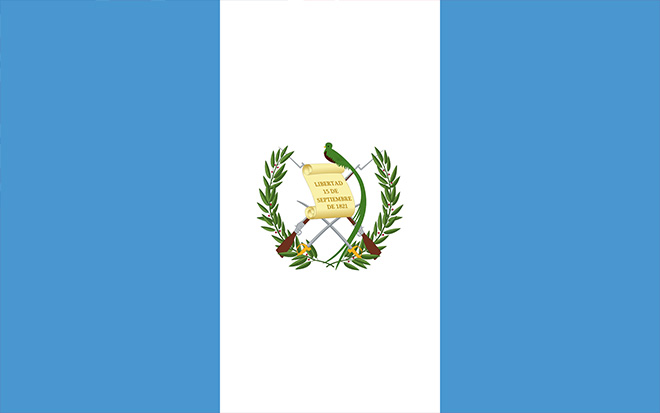
Visas and Onboarding Services in Guatemala
Evaluating Guatemala for growth or nearshoring need two things: a compliant visa pathway and a day-one-ready onboarding plan. Serviap Global coordinates immigration milestones, employer requirements, and onboarding deliverables so hires can start legally and smoothly – guided by LATAM experts.

Table of Contents
Overview: visas and onboarding
Visas determine whether a foreign national can enter, remain, and perform paid work in Guatemala. Onboarding turns approval into compliant employment: a signed contract, payroll setup, and required registrations.
For US companies, success comes from alignment: employer sponsor steps, candidate documents, local authorities, and realistic start dates. Our goal is to give you a clear workflow, decision tools, and a partner that runs the process end-to-end.
How the service works
We run a predictable workflow with clear ownership and documentation at every step – ideal when you need Guatemala work visa support for employees and consistent execution across LATAM.
A five-step workflow you can track
- Eligibility assessment: Confirm candidate profile, role, start date, and whether a work authorization or temporary residence is required; flag constraints early.
- Document preparation: Create a Guatemala work permit documents checklist tailored to the case; coordinate translations, notarization, and legalization as needed.
- Application submission: Coordinate filings with the relevant authorities (employer-side and employee-side) and keep an auditable submission record.
- Approval and relocation: Track milestones, support travel planning and local logistics where applicable, and align the start date to approval timing.
- Ongoing support: Maintain a compliance file, renewals calendar, and post-arrival support for changes to role, address, or employment status.
Work authorization pathway in Guatemala
The Guatemala temporary residence work permit process often involves parallel employer and employee steps. Requirements can change, but with complete documentation the reference timeline is often about 1-2 months. Work authorizations are commonly issued for one year and renewable if employment continues (confirm case-specific rules with local counsel).
Applicants outside Guatemala
Applicants outside Guatemala typically begin with employer sponsor preparation and the job offer/contract. The candidate gathers home-country records (such as background checks and civil documents). After filing, the case moves through review and approval before travel and start-date alignment.
Applicants already in Guatemala
Applicants already in Guatemala must show legal stay while the employer completes sponsor registrations and any required certifications. Work permit and residence filings are often coordinated together. After approval, the hire receives final authorization and proof of status for work and residence.
Documents and preparation checklist
Below is a practical checklist. Exact requirements vary by case and can change; confirm with local counsel.
Document | Provided by | Notes |
Valid passport (copy and original) | Employee | Keep copies of all pages used for travel and identification; confirm validity/expiry. |
Job offer letter or signed employment contract | Employer/EOR | Role, compensation, start date, and working conditions should match internal approvals. |
Proof of legal stay (if in-country) or residence process | Employee | Requirements vary; confirm what is acceptable for the specific pathway. |
Employer accounting certification (local payroll ratio) | Employer/EOR | Some cases require an employer certification regarding local payroll composition; prepare early. |
Legalized company documentation | Employer/EOR | Corporate documents may need legalization and signatures from authorized representatives. |
Criminal/police records and civil documents (home country) | Employee | May require apostille/legalization and certified translation to Spanish. |
Application forms and government fee receipts | Employer/EOR + Employee | Maintain a single compliance folder with a clear version history. |
Passport photo(s) | Employee | Use current, compliant photo specifications (background, size, etc.). |
Onboarding employees in Guatemala
Once the immigration pathway is defined, employee onboarding in Guatemala should begin immediately. A strong onboarding plan reduces the risk of payroll delays, incomplete compliance files, and misaligned start dates.
Contract readiness: After acceptance, the offer and contract should define title, salary, benefits, start date, and working conditions. Keep the signed contract in the employment file and confirm signature/format requirements for your situation.
Document collection: Gather ID and tax data, proof of address, banking details, and role-specific records. For many hires this includes DPI (national ID) and NIT (tax ID), plus supporting records required by employer policy.
Registrations and payroll: Before or on day one, confirm tax status, set up statutory contributions, and validate payroll inputs to avoid first-pay delays.
IT and equipment: Assign tools and document handover when needed. Operational onboarding can often be completed in a few business days once documents are ready.
Benefits for US employers
This service is built for commercial investigation: you want a clear path from ‘we found the candidate’ to ‘the employee is working legally and on payroll.’ Key benefits for US employers include:
- Faster, clearer timelines – you get a realistic plan based on the role, location, and documentation readiness.
- Single point of coordination – reduce back-and-forth between immigration, HR, payroll, and the candidate.
- Audit-ready documentation – a centralized file with submissions, approvals, and onboarding records.
- Lower compliance exposure – structured checks for immigration status, contract completeness, and payroll readiness.
- Scalable expansion – repeat the same process for multiple hires and new functions in Guatemala.
- Candidate experience – guided document requests and clear instructions reduce drop-off and frustration.
- Aligned EOR execution – if you do not want to set up a local entity, you can operationalize hiring quickly and hire employees in Guatemala without an entity.
Country employment snapshot
Country employment snapshot (high-level). This is a practical view for planning; statutory rules and thresholds can change and must be verified for your specific scenario.
Item | High-level planning note |
Currency | Guatemalan quetzal (GTQ). |
Payroll frequency | Commonly monthly; can vary by employer policy and role. |
Typical working time | Schedules vary by industry; align contract hours and overtime rules to local standards. |
Minimum paid vacation | Statutory minimum applies; confirm entitlement by tenure and contract type. |
Public holidays | National holidays apply; some employers include additional company days (confirm annually). |
Social security and labor contributions | Employer/employee contributions apply; rates and caps vary by category and updates. |
Income tax withholding | Withholdings depend on taxable income and local rules; confirm employee tax status and reporting duties. |
Probation and contract types | Common approaches include indefinite, fixed-term, or project-based contracts; confirm what fits the role. |
Termination considerations | Notice, severance, and documentation vary by cause and tenure; plan exit processes in advance. |
Data and HR recordkeeping | Keep payroll, contract, and immigration records securely; align privacy practices to local and cross-border requirements. |
Compliance and risk mitigation
Compliance and risk are the hidden costs in cross-border hiring. For Guatemala immigration compliance for hiring, the goal is to prevent delays and keep an auditable trail. Common risks and mitigations include:
- Immigration non-compliance (working before authorization): align start dates to approvals; track milestones and keep proof of status.
- Incomplete or inconsistent documentation: enforce a single document checklist, version control, and translation/notarization tracking.
- Misclassification and scope creep: define role and work location clearly; review contractor vs employee classification before onboarding.
- Payroll and withholding errors: validate tax IDs, banking details, and contribution setup before first payroll run.
- Entity and permanent establishment confusion: document the operating model (EOR vs entity) and define responsibilities in writing.
- Data privacy and access control: limit access to sensitive documents; use secure transfer and retention policies.
- Contract enforceability gaps: confirm contract language, signatures, and required annexes; retain physical copies when required.
- Renewal and change management failures: calendar renewals, address changes, and role changes to avoid status interruptions.
Compare options: EOR vs PEO vs entity
Compare options for hiring in Guatemala. The right model depends on speed, control, cost, and risk tolerance.
Model | Best for | Pros | Considerations |
Employer of Record (EOR) | Fast market entry and entity-free hiring | No need to open a local entity; local employment and payroll run compliantly; support for visa coordination and onboarding | Less direct control over some employer-of-record obligations; service fees apply |
Professional Employer Organization (PEO) | Companies that already have a local entity | Operational HR support while your entity remains the employer; can streamline payroll and HR administration | Usually requires your own entity; does not remove entity-level compliance obligations |
Local entity (your company) | Long-term presence with high control | Full control over employment policies, branding, and internal systems; may optimize costs at scale | Slower setup, higher ongoing compliance burden, and local corporate/tax requirements |
Pricing and implementation timeline
Most programs combine a recurring EOR service fee (per employee per month) with one-time setup items and pass-through government fees. If you need EOR visa and relocation assistance Guatemala, immigration case management may be scoped per case based on complexity.
How pricing is typically structured
- What the monthly service typically covers: Local employment administration, payroll processing coordination, statutory contributions coordination, HR compliance guidance, and ongoing employee support.
- What may be quoted separately: Visa/work authorization filings, translations/notarizations/legalizations, government fees, relocation logistics, and exceptional HR events (role changes, offboarding projects).
What can change the price
- Role type and seniority (documentation and compliance complexity can vary).
- Candidate location (in-country vs outside Guatemala) and required civil records.
- Number of hires and whether you need a repeatable onboarding playbook.
- Urgency (expedited document work may require additional resources).
- Benefits package design and payroll structure requirements.
Implementation timeline (example)
- Weeks 1-2: Eligibility review, document plan, sponsor preparation, and onboarding blueprint.
- Weeks 3-4: Submissions, status tracking, onboarding document collection, and payroll readiness checks.
- Weeks 5-6 (as needed): Approvals, final registrations, and first payroll run support.
Best practices and common mistakes
Best practices and common mistakes to avoid:
- Start with the end date: work backward from the desired start date and build a buffer for translations and legalization.
- Use one source of truth: a single checklist and secure folder prevents mismatched versions of forms and IDs.
- Align HR and immigration early: job title, location, and compensation must match across offer, contract, and filings.
- Avoid signature surprises: confirm when wet-ink signatures or physical copies are required; plan logistics accordingly.
- Do not run first payroll ‘blind’: validate tax IDs, bank details, and contribution setup before the first run.
- Plan renewals from day one: calendar the authorization validity and build a renewal playbook for your team.
Why choose Serviap Global
Why choose Serviap Global for Guatemala visas and onboarding:
- LATAM Experts: local context and practical execution across the region, not generic templates.
- End-to-end ownership: one team coordinates immigration steps, onboarding, and ongoing HR support.
- Compliance-first execution: documentation discipline, milestone tracking, and auditable records.
- Human-centered support: multilingual guidance for your team and your hires, with clear response expectations.
- Scale-ready operations: repeatable playbooks and centralized visibility through our operating model.
Trust indicators (internal reference):
- 25+ years of local HR expertise and 15+ years supporting global EOR programs (internal reference).
- Trusted by 215+ companies worldwide with a 4.7/5 satisfaction indicator (internal reference).
Trust builders for legal and procurement
Trust builders for procurement, legal, and HR stakeholders:
- Clear scope and ownership matrix: who provides what document, who submits, and who stores the evidence.
- Process transparency: milestone tracker from eligibility to approval to onboarding completion.
- Security-minded document handling: controlled access, secure transfer, and retention guidance.
- Operational readiness: onboarding checklist, payroll inputs validation, and first-payroll run support.
- Change management: documented steps for role changes, address updates, and renewals.
Ready to hire in Guatemala with confidence?
Talk to our team of LATAM experts to map the fastest compliant path for your roles, build a clear onboarding plan, and receive a quote aligned to your timeline.
Contact Us to get started.
FAQ’s
1. How long does the visa and onboarding process typically take in Guatemala?
Timelines depend on the candidate’s location, document readiness, and the authorization pathway. As a practical reference, cases with complete documentation may reach a decision in roughly 1-2 months. Some in-country scenarios can move faster when legal stay and documents are already in place. Onboarding activities (contract, payroll inputs, and registrations) can often be completed in a few business days once all documents are received. Build a buffer for translations, notarization, legalization, and internal approvals to protect the start date.
2. What documents are commonly requested for work authorization and residence steps?
Most cases require identity documents (passport), a job offer or signed employment contract, application forms, photos, and proof of fee payment. Depending on the pathway, the candidate may also need criminal/police records and civil documents from their country of origin, which can require legalization and certified translation into Spanish. Employers typically provide corporate documents and, in some situations, supporting certifications. Requirements can change, so we create a case-specific checklist and track each document from request to submission.
3. Can an Employer of Record (EOR) help with visas and relocation support?
Yes. An EOR can coordinate the operational and compliance side of the process: collecting documents, aligning the job offer and contract, managing case milestones, and supporting local logistics after approval. The EOR model is especially useful when you want speed without opening a local entity and you need one team to connect immigration steps with payroll and onboarding readiness. Government authorities make the final decision, but strong coordination materially reduces delays and keeps documentation audit-ready.
4. What’s the difference between immigration support and onboarding support?
Immigration support focuses on legal authorization to work and, when applicable, live in Guatemala, including eligibility checks, document preparation, filings, and renewal planning. Onboarding support begins once the candidate accepts the offer and covers employment activation: contract execution, payroll setup, tax and social security registrations, equipment handover, and documentation retention. Both are interdependent. If onboarding is not ready, first payroll can fail; if immigration is not ready, the employee cannot start legally.
5. What are the most common causes of delays – and how can we prevent them?
The most common causes are missing or inconsistent documents, late translations or legalizations, and misalignment between role details across the offer, contract, and forms. Delays also happen when start dates are set before the approval timeline is understood. Prevention is operational: start with eligibility and a document plan, use one checklist and a secure folder, confirm signature requirements early, and run a payroll-readiness check before day one. We maintain a milestone tracker so stakeholders always know what is pending and why.
6. Do US companies need a Guatemalan entity to hire employees in Guatemala?
Not necessarily. If you establish a local entity, you can hire directly but must manage local payroll, compliance, and ongoing corporate obligations. If you want to hire without setting up an entity, an Employer of Record can employ the worker locally on your behalf and run payroll and compliance administration. This option is often preferred for pilots, small teams, or when speed is critical. We help you compare models and choose the approach that best fits your risk tolerance, budget, and timeline.
7. How do tax IDs and social security registration fit into onboarding?
They are core onboarding milestones because they enable compliant payroll. During onboarding, we confirm the employee’s tax identification status and collect the payroll inputs needed for withholding and reporting. We also coordinate the steps required for statutory contributions and ensure the employee is properly enrolled in the systems used for ongoing compliance. If these steps are not completed on time, the first payroll run may be delayed or processed incorrectly. That’s why we treat registrations as day-one critical tasks, not optional paperwork.
8. How is pricing typically structured for visa and onboarding services?
Pricing usually has two layers: (1) a recurring service fee per employee per month for EOR employment administration and ongoing HR support, and (2) one-time or per-case fees for immigration work, plus pass-through government charges and third-party costs (translations, notarization, legalization, courier, and similar). Final pricing varies with role complexity, candidate location (in-country vs abroad), urgency, and the scope of benefits and payroll requirements. We provide a clear scope, timeline, and assumptions so procurement can evaluate the total cost of ownership.