



Table of Contents
The widespread adoption of remote and hybrid work models has made discussion of remote work and mental health a necessity. While flexible work arrangements are generally very popular among professionals, this way of working also presents emotional and psychological challenges that can affect wellbeing over time.
Mental health involves emotional, psychological, and social well-being and affects how we think, feel, and act. For this reason, having good mental health is essential at all stages of life, as it helps determine how we handle stress, relate to others, and make decisions.
Understanding the relationship between remote work and mental health, and taking steps to protect the wellbeing of employees (or yourself if you work remote), can be critical to maintaining productivity and developing a professional’s potential.
Because an employee who has the support and tools needed to maintain good emotional wellness will generally be happier and perform better, and as a result be more committed to the organization.
Cost savings, flexible schedules, and better work-life balance are some of the advantages of remote work, and mental health can benefit from these conditions. Still, remote work can also lead to feelings of loneliness, isolation, anxiety, depression, and burnout if not managed carefully.
While companies should concern themselves with remote work and mental health when building a distributed workforce, employees should also make efforts to safeguard their own wellness when working from home or away from the office for extended periods of time.
Below, some of the potential negative psychological effects of telecommuting are considered, before some practical and simple tips are provided on how to protect and imporve mental health among remote workers.
At Serviap Global, around 85% of our global team members work remotely, while the rest are on hybrid schedules. As a provider of international PEO / EOR services, we assist clients with quick and compliant hiring around the world, with the majority of the professionals we hire working remotely, too.
Contact us for more information.
Remote work and mental health: some concerns to look out for
Loneliness and isolation
Humans are naturally sociable, so losing regular face-to-face contact with coworkers can trigger feelings of loneliness and a lack of belonging in the workplace. Remote work and mental health do not always align automatically.
Being alone and feeling alone are not the same thing. A person can be surrounded by others and still feel misunderstood or disconnected. Persistent feelings of isolation increase the risk of depression, physical illness, and emotional distress.
Additionally, spending long periods at home without clear routines or boundaries between work and personal life can negatively affect mental wellbeing, especially when social interaction becomes limited.
Anxiety
When discussing remote work and mental health, it is important to address anxiety, which often manifests as intense and excessive worry about everyday situations.
If a problem arises while working remotely and is not immediately resolved, a person experiencing anxiety may feel fear, restlessness, and uneasiness. This emotional state can make it difficult to concentrate and perform effectively.
Even minor misunderstandings or routine workplace challenges can feel overwhelming, leading individuals to worry about worst-case scenarios such as job insecurity or underperformance.
Depression
Reduced social interaction, spending long hours indoors, and decreased motivation can contribute to low mood and persistent sadness among remote workers.
Depression is an emotional disorder that causes ongoing feelings of sadness and a loss of interest in activities. It affects a person’s thoughts, behavior, and emotional state and can lead to both physical and psychological challenges.
A remote employee experiencing depression may struggle with productivity, disengage from their responsibilities, or ultimately leave the organization if adequate support is not available.
Burnout
Burnout is another common concern related to remote work and mental health, particularly when individuals work long hours without sufficient rest or boundaries.
The World Health Organization (WHO) defines burnout as a syndrome resulting from chronic workplace stress that has not been successfully managed. It is characterized by exhaustion, mental distance from work, and reduced professional effectiveness.
Lack of breaks, poor ergonomics, constant connectivity, and blurred lines between work and personal life can all contribute to burnout among remote professionals.
Remote work and mental health: 7 tips to maintain wellness
Implementing the following seven tips can help remote workers maintain or improve their mental health and emotional wellbeing.
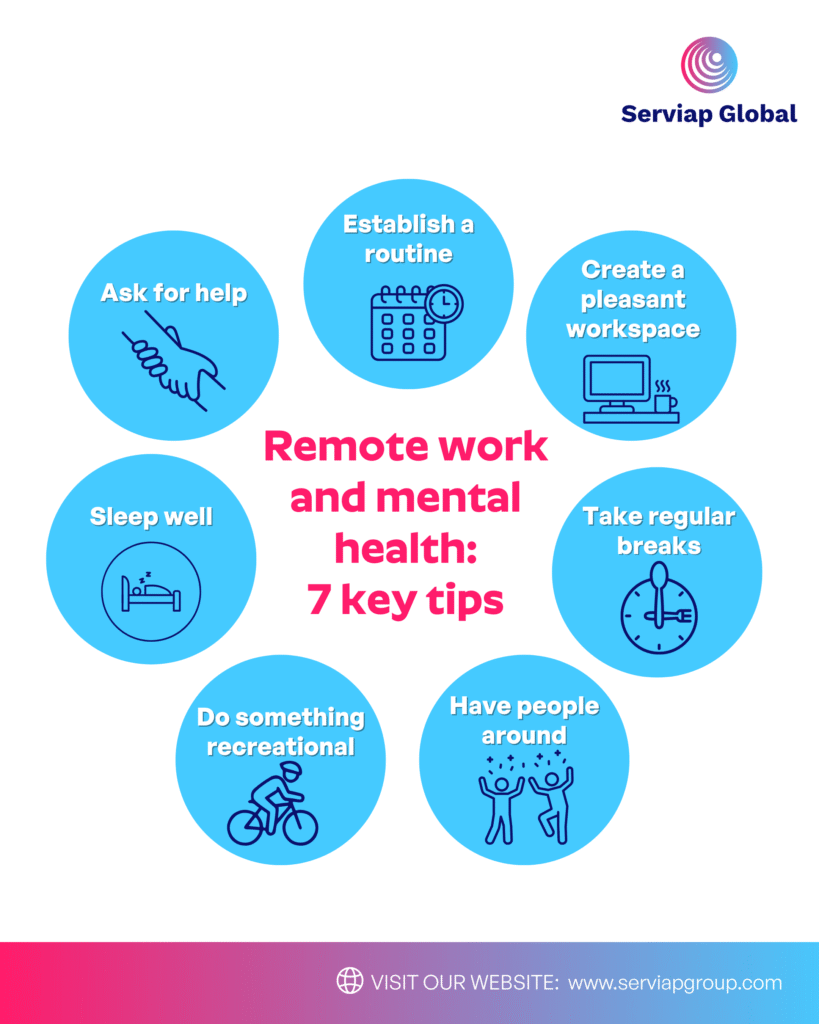
1) Establish a routine
If you are wondering how to improve emotional wellness when working remotely, creating a daily routine is one of the most effective steps.
Planning your workday, managing your time, and setting clear schedules for working, eating, and resting help create structure and reduce stress.
Although flexible schedules are a major benefit of remote work, they can also lead to longer working hours. A healthy routine should encourage balance, self-care, regular breaks, and sustainable work habits.
2) Create a pleasant workspace
WoWorking remotely offers comfort and convenience, but having a dedicated and pleasant workspace is essential for focus and wellbeing.
Invest in a desk and chair that support good posture and comfort. Personalize your workspace with elements that help you feel calm and motivated, such as plants, photos, or meaningful objects.
A well-designed workspace can improve concentration, reduce physical discomfort, and positively influence emotional wellbeing.
3) Take regular breaks during the day
Regular breaks are essential for maintaining mental clarity and reducing stress. Use breaks to hydrate, prepare a meal, take a short walk, or get fresh air.
Setting reminders to step away from the screen can help refresh your mind, increase creativity, and prevent mental fatigue.
Active breaks, such as stretching or light movement, also help prevent physical discomfort associated with prolonged sitting.
4) Work around other people or animals
While some people prefer working alone, others benefit from having company. Working near family members, roommates, or even pets can reduce feelings of isolation.
For those who miss social interaction, coworking spaces, libraries, or coffee shops can provide a sense of community while maintaining productivity.
Some remote-first companies also support employees by offering access to coworking spaces when available.
5) Maintain a hobby or recreational activity
One advantage of remote work is the opportunity to dedicate time to hobbies and recreational activities.
Engaging in sports, creative activities, cooking, or music can help you disconnect from work and maintain a healthy balance between professional and personal life.
Hobbies also support emotional expression, relaxation, and social interaction, all of which contribute positively to mental health.
6) Sleep well
Adequate sleep is essential for emotional and physical wellbeing. The National Sleep Foundation recommends that adults aged 18 to 64 get between seven and nine hours of sleep per night.
Poor sleep can lead to irritability, reduced concentration, memory issues, and decreased work performance.
Improving sleep hygiene by maintaining consistent sleep schedules, limiting screen time before bed, and creating a comfortable sleeping environment can significantly support mental health.
7) Ask for help
Recognizing your limits and understanding how you respond to stress are key aspects of maintaining emotional wellness.
If you feel overwhelmed, take time to pause, breathe, and step away from work when needed. Identifying stress triggers can help you determine what is within your control and what is not.
Seeking support from colleagues, friends, or mental health professionals is a proactive and healthy step when challenges feel unmanageable.
Remote work and mental health: what companies can do
Remote work and mental health are closely linked to productivity, engagement, and employee retention, making wellbeing a priority for organizations with distributed teams.
Employers can support mental health by designing work processes that account for remote environments, encouraging regular breaks, and ensuring access to psychological support when needed.
Creating opportunities for informal connection, such as virtual team-building activities or open conversations during meetings, can help reduce emotional distance between team members.
Leadership also plays a critical role. When managers model healthy behaviors and prioritize wellbeing, employees are more likely to feel empowered to do the same.
Serviap Global offers quick, compliant global hiring
At Serviap Global, we assist clients with international PEO / EOR services in over 100 countries. Many of the professionals we hire on behalf of clients work remotely, giving us firsthand insight into the importance of supporting remote work and mental health.
We also offer global talent acquisition services to help companies find qualified candidates for direct hires.
Contact us to learn how we can support your global hiring needs.
Remote work and mental health: frequently asked questions
Is remote work bad for mental health?
Remote work is not inherently bad for mental health. However, without clear routines, boundaries, and social interaction, it can increase stress, isolation, and burnout.
How does remote work affect mental health over time?
Remote work can affect mental health positively or negatively over time, depending on workload, communication, autonomy, and emotional support.
What are the most common mental health challenges for remote workers?
Common challenges include loneliness, anxiety, difficulty disconnecting from work, low motivation, and burnout.
How can remote workers protect their mental health?
Remote workers can protect their mental health by establishing routines, taking regular breaks, prioritizing sleep, maintaining social connections, and setting work-life boundaries.
What can employers do to support mental health in remote teams?
Employers can support mental health by encouraging healthy workloads, open communication, flexibility, and a culture that values wellbeing.